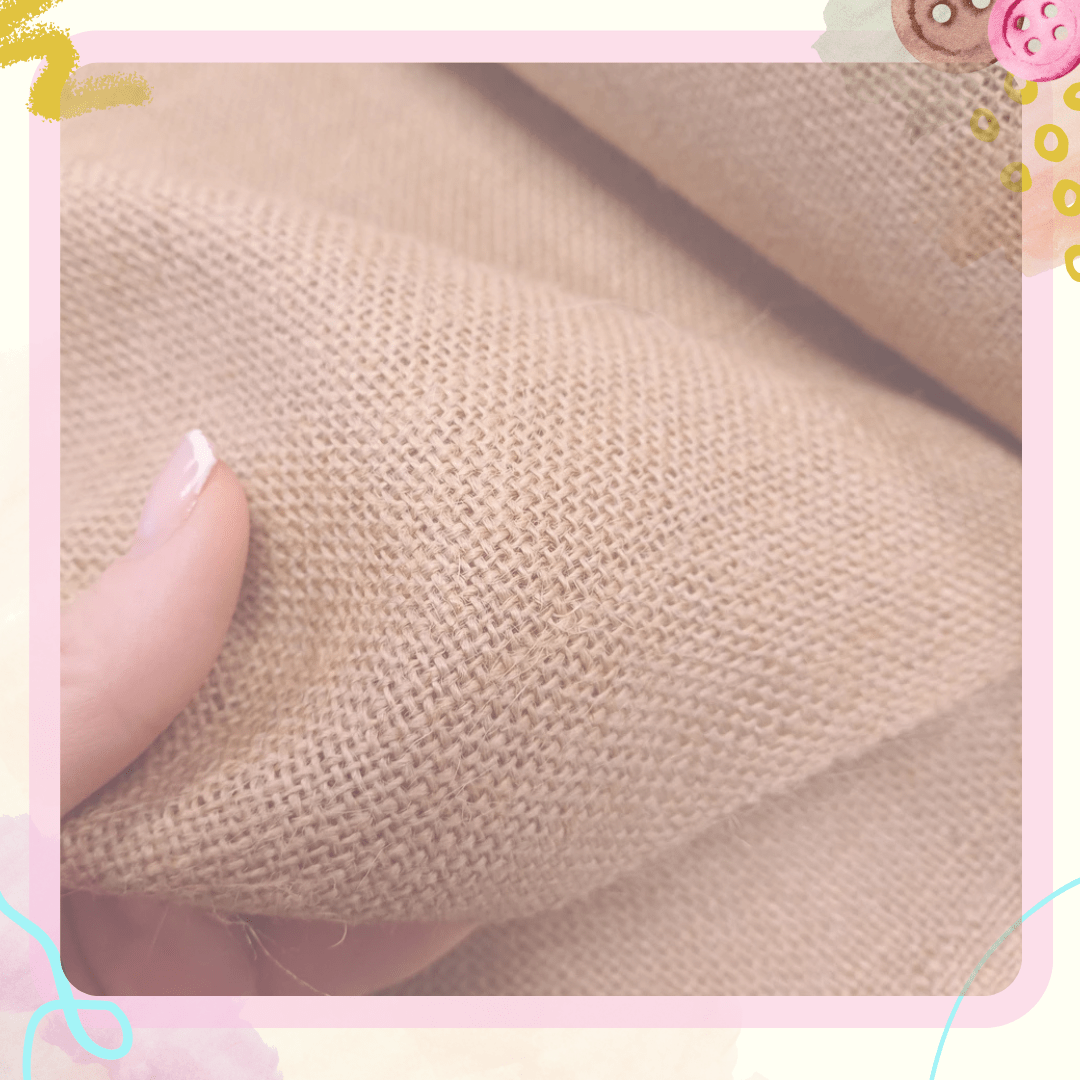
What is JUTE?
Sniedze Gaštola-KalniņaJute fabric – a natural material with wide creative possibilities
What is jute fabric?
Jute fabric is a textile of natural origin made from the fibres of the jute plant. Jute (also known in English as burlap or hessian) comes from the bark of tropical plants of the genus Corchorus, grown mainly in India and Bangladesh. These coarse, golden-brown fibres are spun into yarn and woven into a firm fabric with a distinctly rough texture. Thanks to its natural origin, jute fabric is 100% biodegradable and environmentally friendly – more on that below. Historically, jute fabric was often used to sew sacks, which is why it is also called “sackcloth”.

Why choose jute?
-
Natural and eco-friendly: Jute fibres are of plant origin, growing them requires relatively little water and pesticides, and the material is fully biodegradable. This places jute among the most environmentally friendly textile materials. Interestingly, while growing, jute plants can absorb carbon dioxide several times more intensively than trees, making jute fabric a sustainable choice for anyone who cares about nature.
-
Strong and long-lasting: Jute fabric stands out for its high strength. It can carry heavy loads and last for years, because lignin – a natural polymer found in jute fibres – gives the fabric special resistance to sunlight and moisture. Even with intensive use (for example in sacks or rugs), good-quality jute fabric stays intact for a long time.
-
Breathable and safe: The coarse weave and natural fibres mean that jute fabric breathes well (it lets air through). As a result, jute products do not trap moisture and are also suitable for storing food – historically, grain, potatoes, coffee beans and more were kept in sackcloth bags, because jute protects the contents from spoiling. In everyday use, jute items do not go mouldy or build up static, which makes them practical.
-
Affordable and economical: Compared with other natural textiles (such as linen or cotton), jute is a fairly inexpensive fabric. Its low cost combined with its durability is the reason jute is widely used wherever an economical yet hard-wearing solution is needed. Choosing jute lets you save money without sacrificing quality.

Practical uses
Jute fabric has a very wide range of uses, both at home and in industry. Thanks to its properties, jute is used in many different areas:
-
Sacks and packaging: One of the traditional uses of jute fabric is sacks and packaging. Jute is sewn into strong sacks for grain, potatoes, coffee beans and other agricultural goods. Today, jute shopping bags are popular too – they are strong, reusable and eco-friendly. Jute is also perfect for making gift bags and gift wrapping, giving a natural, plastic-free look.
-
Interiors and furniture: The natural look and durability of jute are valued in interior design. The fabric is used to make rugs, curtains and cushion covers, and even for upholstery to create a rustic atmosphere. A jute rug, for example, adds cosiness and resists wear, while covering a chair or sofa with jute fabric is a durable and ecological solution. Thanks to its stiffness, jute is also used in the production of mattresses and certain types of workwear.
-
Decorations and crafts: Craft enthusiasts love using jute for all kinds of decorations. Wedding decorations often feature jute ribbons, table runners or a combination of lace and jute fabric for a vintage look. In seasonal decorations (such as Christmas wreaths or midsummer décor), jute fabric adds a warm, natural accent. Jute is also used to make exclusive accessories and handicrafts – for example bags, jewellery or wall decorations. Jute sheets can become a base for paintings or photo frames, and narrow strips can be turned into decorative flowers and bows. The possibilities are almost endless if you let your imagination run free!

Sewing tips for working with jute
Working with jute fabric can be a little different from sewing finer fabrics, because jute is thick and tends to shed fibres. Here are a few tips to help you sew jute successfully:
- Needle and thread: Choose a strong needle designed for heavy fabrics, such as size Nm 90/14 or 100/16, which can pierce the thick fibres. Also use strong thread – ideally synthetic (polyester) thread that won’t break under strain. If you want a particularly rustic look, you can also sew with a thicker decorative thread (for example upholstery thread), but make sure it suits the needle you have chosen.
- Finishing edges to prevent fraying: Jute fabric tends to fray, so cut edges must always be finished. An effective method is to stitch the edges with a zigzag stitch or finish them with an overlocker – this secures the fibres and stops the fabric from fraying further. If you don’t have an overlocker, there is a simple alternative: fold the edge inwards twice (forming a double hem) and stitch it down – this hides the rough edge so it won’t unravel. For extra security, you can seal the cut edges with a special anti-fray product or fabric glue, applying a thin layer along the very edge. Let the glue dry before sewing so that it doesn’t hinder the needle.
- Sewing technique: When working with jute, sew more slowly and carefully than with thin fabric. The coarse weave tends to slip, so it is best to hold pieces together with clips (for example these) rather than pins – clips hold the fabric better and won’t get lost in the weave. Try not to rush, so that the stitching is even and the fabric doesn’t pucker. Leave a slightly larger seam allowance than usual – about 1–1.5 cm – because jute fabric is thick and loosely woven, and a larger allowance makes the seam stronger.
- Preparing the fabric: Before you start sewing, prepare the jute fabric. Jute often has a distinctive factory smell and may contain dust from the production process. Charlotte's Fabric recommends washing the fabric or airing it thoroughly before use. Wash jute on a gentle cycle (preferably up to 30 °C) and dry it flat rather than in a tumble dryer – this softens the fibres and reduces dust. If you prefer not to wash it, at least shake it out and air it outdoors to get rid of loose fibres. Prepared fabric is more pleasant to work with and sheds less. (Note: after sewing, it is also a good idea to clean your sewing machine and work surface, as jute can leave behind lots of fine fibres.)
If you follow these tips, working with jute will be much easier and the end result will be better. You’ll soon notice that even the seemingly unruly “sackcloth” can become a rewarding material for beautiful handicrafts!
Ideas for creative projects
Jute fabric opens up lots of possibilities for creative sewing projects. What can you make from it? Here are a few ideas for inspiration:
-
Small fabric bags: Jute bags are great for gift wrapping or presenting souvenirs. You can sew small gift bags with a drawstring closure – they are reusable and look very stylish. Small jute bags can also be used to hold dried lavender or other aromatic herbs (sachets for the wardrobe) – jute lets the scent through but keeps the contents inside.
-
Tablecloths and table runners: Jute fabric makes wonderful tablecloths or decorative table runners. The coarse fabric creates a warm, country-style atmosphere on the table – perfect for weddings, celebrations or rustic photo shoots. In everyday use, a jute tablecloth resists stains and wear. To finish the edges, combine jute with decorative lace or ribbon for an elegant boho table décor.
-
Cushion covers: Sew decorative cushion covers from jute to refresh your interior with a natural accent. Jute cushions fit perfectly into farmhouse, summer cottage or boho interiors. Because jute is slightly rough, it is a good idea to line the inside of the cover with a softer lining fabric – this keeps the cushion comfortable for everyday use. You can decorate the cushions, for example, with black printed lettering or drawings on the jute (for a vintage-style design) or by sewing on lace appliqués combined with the natural fabric.
-
Plant pot covers: Jute fabric is ideal for making decorative covers for plant pots. If you have plain plastic pots at home, you can dress them in a jute “coat” – wrap the pot in jute fabric and tie the top with jute twine or ribbon. The result is a beautiful, natural pot cover that blends perfectly into your interior. Jute covers are especially popular for cacti and succulents, as well as for flower arrangements at weddings (for example jars wrapped in jute and lace). With minimal effort, you’ll achieve a very neat effect!
(Of course, these are just a few ideas – jute fabric lets you make many other projects too, from wall panels and photo frames to bags or aprons. Use your imagination and experiment!)

Where to find sewing patterns?
If you are looking for patterns and tutorials to help you bring your jute fabric ideas to life, it is worth checking out several online resources. Here are a few websites where you’ll find ready-made patterns as well as ideas and tips (some resources are free, others are available for a small fee):
-
Pinterest – a social network where people share ideas through images. Search Pinterest for “jute fabric”, “burlap crafts” or similar keywords and you’ll find countless pictures of DIY projects to inspire you. Images often include links to blogs with tutorials. (For example, Pinterest has idea boards on making decorative wreaths, lampshades, baskets and more from jute.)
-
BurdaStyle – a well-known website for sewing enthusiasts. BurdaStyle offers thousands of patterns for clothing and accessories. Although most are for garments, you’ll also find small projects such as bags, pouches and gift bags, and even decorative items. There are free patterns (in certain sections) as well as paid patterns in PDF format. BurdaStyle’s forums and articles are also a good source of tips on working with different fabrics.
-
Sewmag.co.uk – the official website of the British sewing magazine Sew Magazine. There you’ll find free patterns to download, often with detailed instructions. Sewmag.co.uk publishes new projects every month – you may well find an idea that suits jute fabric (for example a country-style tablecloth or shopping bag pattern). The site also has a tips section that can come in handy when working with jute.
-
Creative Fabrica – an online platform for creative resources. Creative Fabrica offers a huge library of digital resources, including sewing patterns, embroidery designs, cut files and graphics. You can find both free files and subscription/paid content. You may find ready-made patterns, for example for jute bags or decorations. The platform is handy because it brings together the work of many independent designers in one place – just use the search and enter “jute” or “burlap” to find relevant results.
All of these resources can help you find a suitable pattern or idea and adapt it for jute fabric. Remember that any pattern designed for cotton or linen can safely be used for jute too – just follow our tips above on needles, thread and edge finishing.

Buy jute fabric from Charlotte's Fabric
🎁 Good news – you can buy high-quality jute fabric from us! The Charlotte's Fabric shop offers natural jute fabric that is perfect for both decorations and practical handicrafts. Visit our shop in Cēsis, Jāņa Poruka iela 23, and see the jute fabric in person – our team will be happy to help with advice and recommendations.
If you prefer to shop remotely, you can easily order jute fabric in our online shop: Jute fabric We offer fast delivery, so you can start bringing your creative plans to life soon.
Use the magic of jute fabric in your projects – it is nature-friendly, durable and will give special charm to anything you make with it. We wish you lots of successful creative ideas with jute, and look forward to seeing you at the Charlotte's Fabric shop when new materials arrive! 🌿
References:
-
-
ChemLV. “Maisu audums (džutas audums)” – description of jute fabric: natural origin, coarse fibres, strength; the fabric is well ventilated, eco-friendly, breathable and safe for food storage; lignin content provides resistance to sun and water, suitable for outdoor use; list of jute uses (sacks, filters, packaging, interiors, crafts, etc.).
-
Deepwear (2025). “10 Best Eco-Friendly Natural Fabrics” – growing jute requires minimal resources, and the fibres are biodegradable. Jute is inexpensive and durable, widely used to make sacks, ropes and textiles.
-
theroundup.org (2024). “Is Jute Eco-Friendly/Sustainable?” – jute is a strong, breathable fibre with a low environmental footprint. Jute fields improve soil fertility and absorb several times more CO₂ than trees.
-
Sew Cute Patterns (2023). “Sewing with Burlap – Tips and Tricks” – sewing advice: use a 90/14 or 100/16 needle and strong polyester or even heavier thread; cut with sharp scissors and apply “Fray Check” or fabric glue against fraying; finish seam edges with zigzag or an overlocker, fold the edge and stitch it down; use clips to hold the fabric, sew slowly and leave a seam allowance of at least 1.3 cm.
-
Charlotte's Fabric – jute fabric product description: unbleached natural jute fabric, 270 g/m², of tropical plant origin. Manufacturer’s recommendation: wash or air jute fabric before use.
-
---------------------------------------------------------------------------------------------------
Leave us a tip and inspire us! ☕️
Every smile and kind word from you inspires us to keep creating even more joy in the world of fabrics. If you’d like to support us, you can leave a tip – for our team it will be a warm thank-you for our work and care.
Click here to add your support: Tip jar
Thank you for being with us – your words and gestures are our inspiration! ❤️


